
Shared Value / 01 / Shared Value
A driver's time should earn more than the fuel it burns
The case for sharing a journey without losing control of your day.
News context checked 25 September 2026 · Reporting dates appear with the sources.
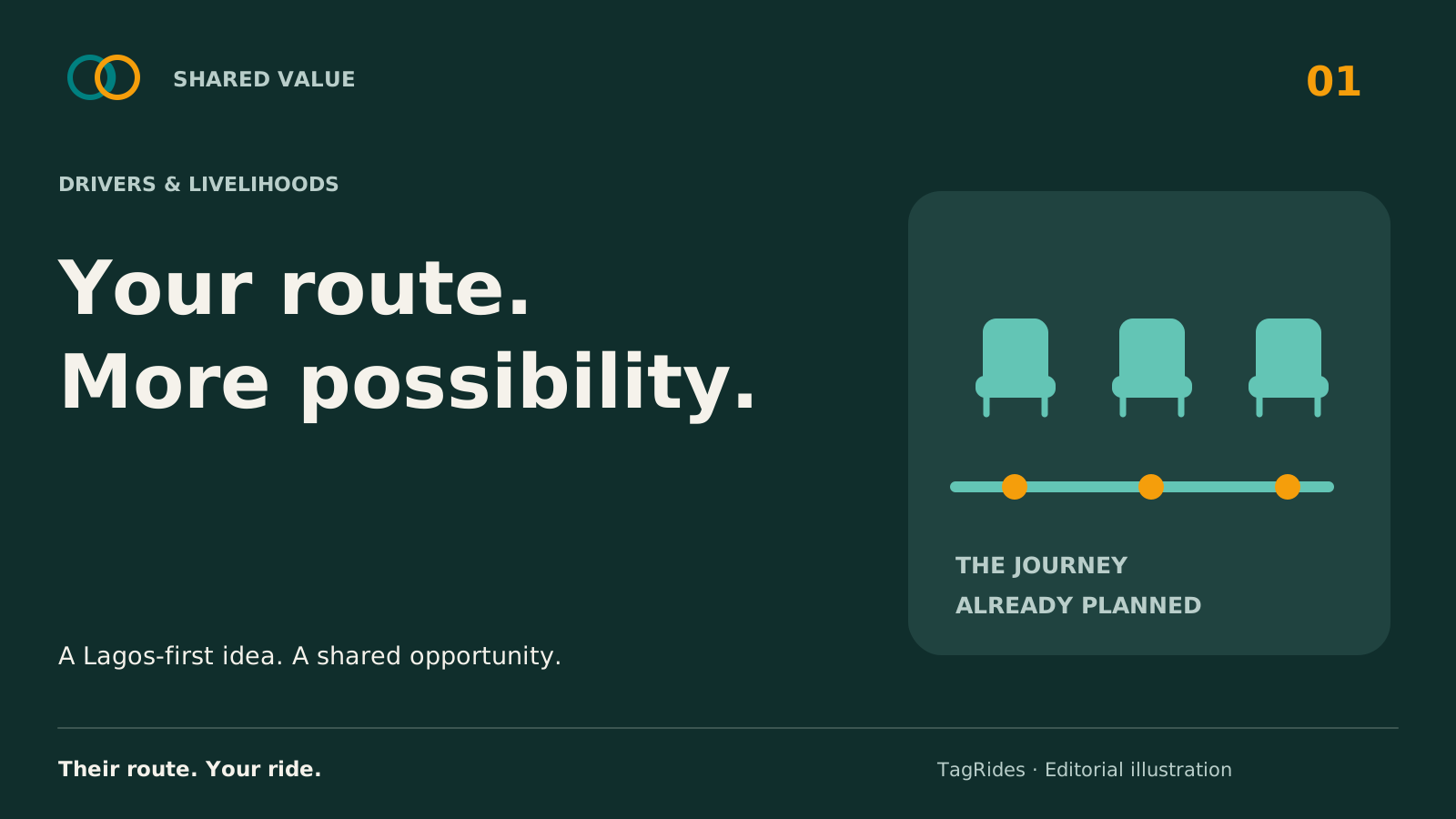
A cancelled pickup disappears from a screen. The fuel spent reaching it does not return to the tank.
For the person behind the wheel, the loss is ordinary and immediate: a little less money to take home, a little more time on the road, another calculation before the next trip.
Fresh fuel-price increases reported in Lagos this September make that calculation harder to ignore.[1] When the cost of filling the tank rises, an unnecessary kilometre becomes an even more expensive way to earn nothing.
That is where the idea behind TagRides begins. Before asking a driver to go somewhere new, ask a simpler question: who needs a seat on the journey this driver already plans to make?
The answer could matter to a worker driving across Lagos, a taxi operator, or a vehicle owner trying to make a working day add up. Available passenger space has value. The challenge is making it useful without letting the search for passengers take over the journey.
Your destination comes first
Sharing a ride is familiar in Lagos. People recognise routes, agree fares and travel together. What is often missing is an easy way to discover a suitable journey before the vehicle passes.
TagRides' Along mode builds around that everyday behaviour. A driver sets a destination and offers available seats. A rider heading in a compatible direction agrees a fare for the stretch they share and meets the driver along the route.
The distinction is practical. The driver is already going somewhere. The passenger joins a suitable part of that trip.
For a moving driver, that means meeting at a pickup point on the existing route rather than making a separate detour to the rider's door. When the driver is stationary, the rider may walk to the vehicle. Pickup details need to work for both people.
Inside the app
See the journey. Understand the offer.
Product in development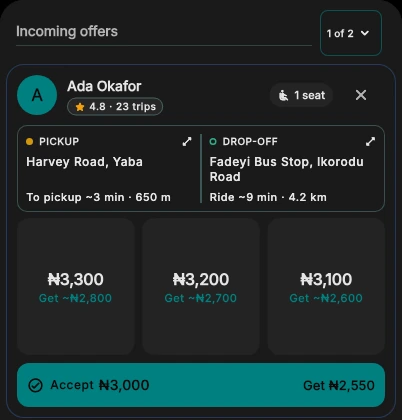
If a pickup falls through, the driver still has the journey they set out to make. A stop or a wait can cost time, but avoiding an unnecessary detour changes the starting point.
The aim is to help drivers earn from their route, while keeping that route their own.
The number that matters is what you keep
On 13 September 2026, Nairametrics reported petrol at ₦1,400–₦1,430 per litre at most Lagos stations it checked, with MRS stations at ₦1,395.[1] These are reported retail prices from that date—not a national average or a live quote for every filling station.
At ₦1,400 per litre, a 20-litre purchase costs ₦28,000. That simple illustration puts the pressure in everyday terms: fuel takes a substantial amount before the driver has accounted for maintenance, platform charges or their own time.
The uncertainty was still in the news on 22 September, when Petroleum Minister Heineken Lokpobiri discussed global energy pressures on Channels Television.[5] Drivers cannot choose the world oil price. They can make decisions about which journeys, stops and pickups are worth taking on.
A passenger's fare can help cover a journey that was already planned. Several suitable passengers could contribute to the same trip. But the useful question is not simply, “How much came in?” It is, “How much is left?”
Fuel, vehicle wear, maintenance, platform charges and time all belong in that calculation. For someone driving to work, sharing may help with an existing travel expense. For a professional driver, it needs to make sense across the whole shift.
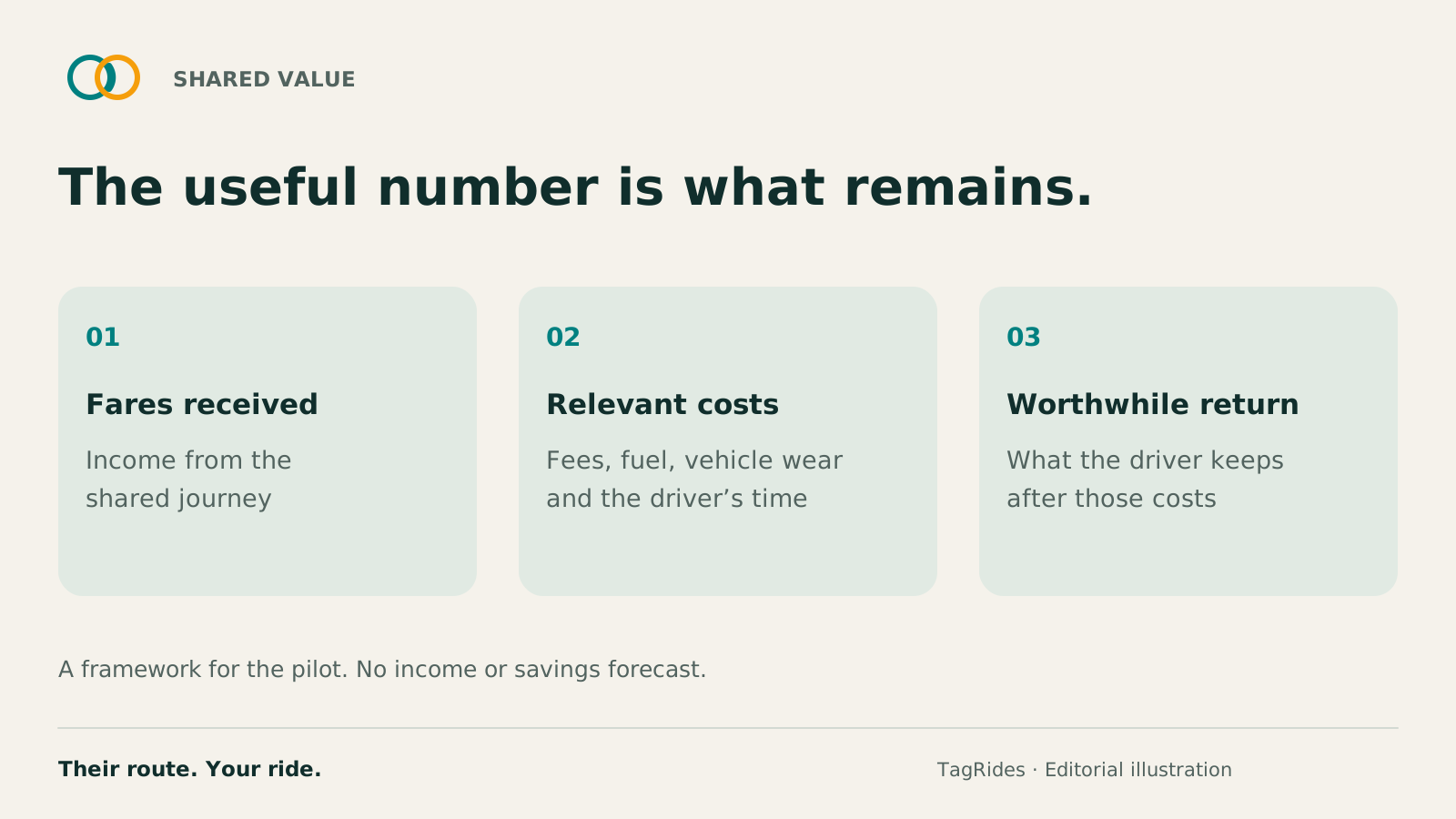
- Fares received
- Income from the shared journey
- Relevant costs
- Fees, fuel, vehicle wear and the driver’s time
- Worthwhile return
- What the driver keeps after those costs
This is also why a low fare cannot be the only measure of success. Riders need a price they can repeat. Drivers need a return that makes offering the next seat worthwhile. A lasting service has to work on both sides of the car.
A seat is useful only when it is really available
Drivers already manage changing passenger needs. Someone gets out. Someone else gets in. Some passengers may have joined outside the app.
TagRides is designed to account for that real working day. Drivers choose how much eligible passenger capacity to offer, and the available-seat count reflects passengers travelling through the app and capacity used outside it.[2]
That gives an existing operator a way to participate without pretending every passenger comes from one platform.
There is an important detail for riders too: an agreed Along fare is not an advance seat reservation. The seat is confirmed at boarding, subject to live availability. Before then, riders can keep other accepted options available.
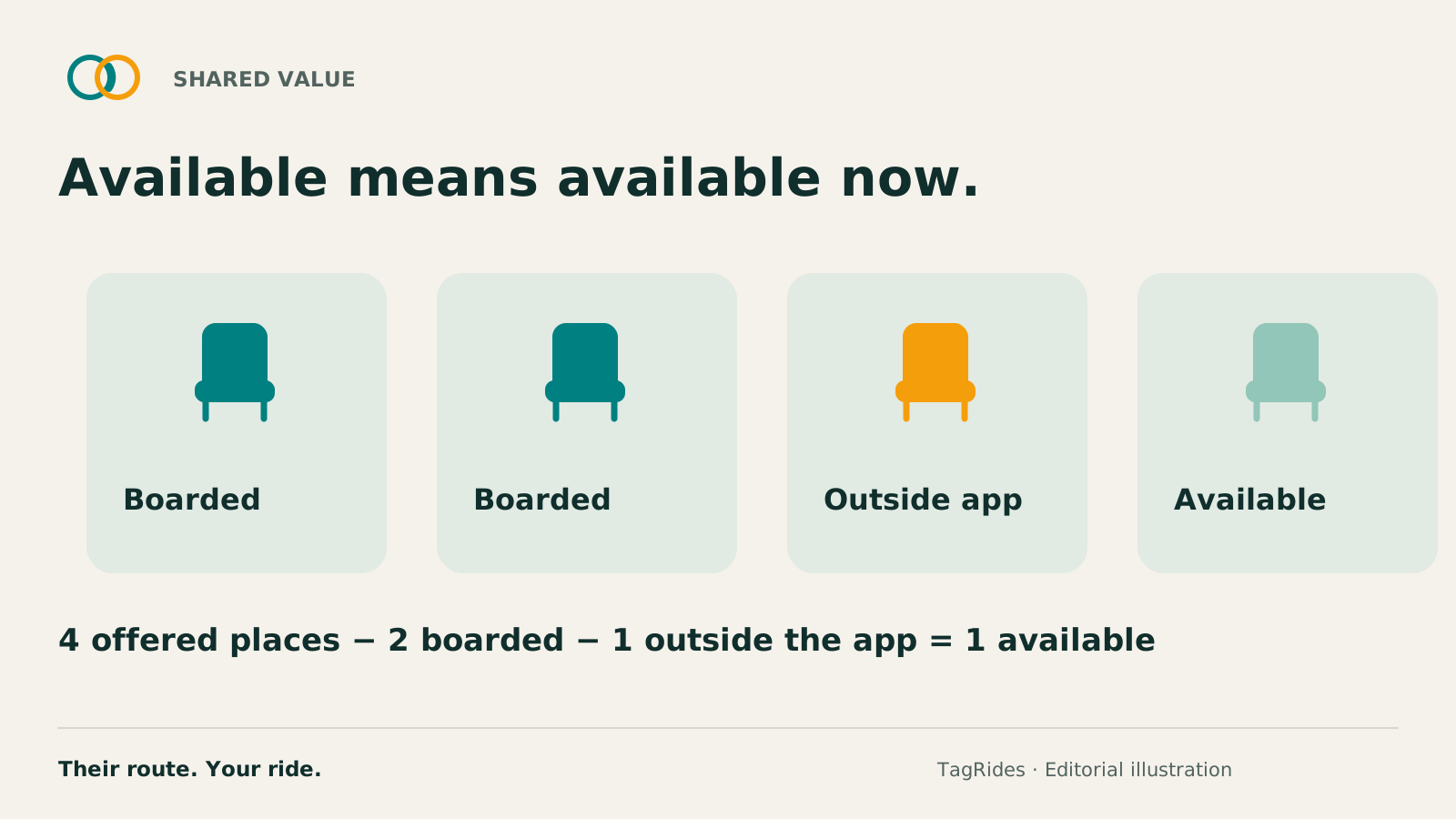
- 4 offered places
- The passenger capacity offered for the journey
- 2 boarded + 1 outside the app
- Three places are already in use
- 1 available place
- An accepted fare is not an advance reservation
Clear seat information matters more than a reassuring number that is out of date. Both people should understand what has been agreed and what still needs to happen.
Trust belongs on both sides of the journey
A rider wants to know who is driving. A driver wants to protect their vehicle, their time and themselves.
Agreed fares, driver and vehicle information, and trip records give the journey a clearer starting point. If a fare is disputed or a bag is left behind, there is a record to begin with.[2]
The responsibility also extends beyond the screen. Pickups should be practical. Passenger places must be lawful and usable. A driver should be able to concentrate on the road. WHO's safe-system approach puts safe vehicles, speeds, roads and road users at the centre of road safety.[3]
These are operating responsibilities, not details an app can solve by displaying a badge. Good technology should support careful driving and useful follow-up.
For vehicle owners, the next question is visibility
A vehicle owner may see the day's total and still have questions. Which journeys earned it? What was actually paid? Which fees applied? What should the driver keep, and what should be remitted?
This is a current operating issue, not just a future dashboard feature. In a 27 July 2026 notice, LAMATA linked fare-revenue losses on its regulated bus services with difficulty buying spare parts, maintaining vehicles and paying staff.[6] The notice concerns those regulated services, but the business lesson is wider: money that cannot be properly accounted for can affect the next day's service.
Trip and fare records could become the foundation for clearer answers. A future fleet service could connect completed journeys with settled payments and the agreement between driver and owner.
That work is a development opportunity for TagRides. A dedicated fleet dashboard and automatic remittances are not being presented as available today.
The direction matters nonetheless. Better records should help both the owner and the driver understand the business. They should make deductions clearer and disagreements easier to resolve.
Existing operators and unions belong in that conversation. They know the routes, the demand and the practical decisions that keep transport moving. A useful new service should learn from that knowledge.
A better day is the first proof
For investors, the driver case comes down to a simple habit: will people keep offering seats because it is worth their time?
A marketplace needs more than registrations. It needs drivers returning on routes and at times riders can use. That requires worthwhile earnings, manageable pickups and a service people trust enough to use again.
TagRides has a built MVP in internal testing and is preparing a focused Lagos pilot. We want to measure completed paid rides, driver earnings after costs, seat use, pickup time and repeat participation.
The larger ambition is opportunity: help people make better use of a journey, strengthen an existing transport business, and build a service that can grow because it is useful. That connects with the aim of SDG 8—productive enterprise and decent work.[4]
The first result should be something a driver can recognise at the end of an ordinary day: the journey still worked, and sharing it was worthwhile.
Own passenger vehicles, drive a repeat route, or organise a driver community? Tell us about your corridor and usual departure time. Help shape the Lagos pilot.
Their route. Your ride.
Sources
Nairametrics, Petrol rises above N1,400/litre as crude oil climbs past $100 per barrel, 13 September 2026. Reported Lagos station checks: ₦1,400–₦1,430 at most checked stations and ₦1,395 at MRS. The ₦28,000 illustration is 20 × ₦1,400; it is not an estimate of a driver's daily fuel use. Source checked 25 September; prices may subsequently change.
TagRides product and research and pilot information. Company descriptions; Along mechanics also reviewed against seat, offer and boarding tests. Internal testing does not establish measured driver outcomes.
WHO, Road traffic injuries. Safe-system and distracted-driving guidance.
United Nations, Goal 8, especially enterprise, decent work and safe working conditions. Intended contribution, not a claim of achieved impact.
Channels Television, Energy Cost Is Global, Tinubu Govt Has No Power To Control Fuel Price – Minister, 22 September 2026, with the linked Politics Today interview. The minister's account is an attributed policy perspective, not an independent price survey.
LAMATA, cash-fare enforcement notice for regulated bus services, 27 July 2026. LAMATA's account of revenue losses and operating costs; not a measured TagRides fleet benefit.