
Shared Value / 03 / Shared Value
The next transport breakthrough may already have a seat
What better use of existing journeys could mean for cities, the environment and the people investing in both.
News context checked 25 September 2026 · Reporting dates appear with the sources.
Look at a line of cars in traffic and it is easy to count the vehicles. It is harder to see the journeys happening inside them.
Someone is going to work. Someone is trying to make an appointment. A driver has passenger space. Nearby, another person needs to travel in much the same direction.
A city works better when those people can reach where they need to be. More vehicles are not, by themselves, the answer. Sometimes the opportunity is to make better use of a journey already happening.
That is the idea behind TagRides: help people find and share suitable space on an existing route. Its first test is local. The questions it raises reach much further.
Lagos is already showing why those connections matter. On 5 September 2026, LAMATA reported that the Blue Line had carried more than nine million passengers in over 70,000 train trips during its first three years.[7] That is a measure of repeated journeys, not nine million distinct customers—and a reminder of how much everyday life depends on useful transport.
Start with the capacity already moving
Lagos already has a rich practice of shared travel. Danfo minibuses, keke tricycles, taxis and everyday commuters connect people through routes and local knowledge.
TagRides' Along mode adds a digital layer to a familiar idea. A driver offers available seats on a planned journey. A rider travelling a compatible route agrees a fare and joins for the stretch that works.
The platform's role is coordination: make the route easier to discover, the agreement clearer and the journey easier to follow.
Captured on iOS
Every connection starts in a real place.
Product in development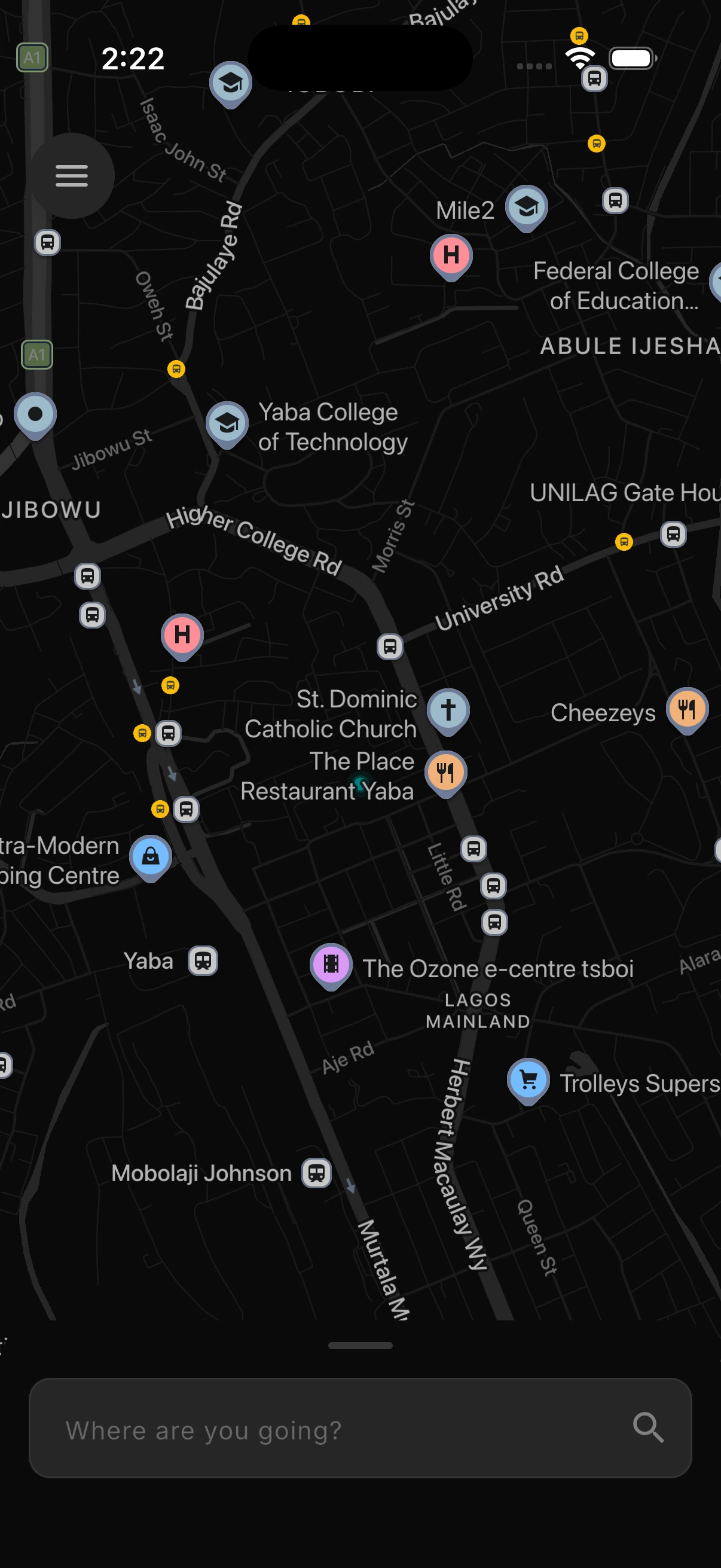
For someone reaching a bus interchange or making a difficult final connection, a suitable shared leg could be useful. For the driver, it could make available passenger space productive. For the city, the interesting possibility is more useful travel from capacity that is already there.
Those benefits depend on how the service is used. That is what the pilot must help us understand.
Why the environmental case is worth testing
The International Energy Agency's March 2026 guidance identifies carpooling as one way to increase vehicle occupancy, reduce oil demand and relieve congestion.[1]
There is a local health reason to take the question seriously too. In an August 2026 report, LAMATA described pollution hotspots around traffic bottlenecks, major intersections and roadside markets. Its account of work with researchers and communities shows why transport decisions affect people waiting, walking, trading and travelling—not only those inside vehicles.[8]
Cleaner air and lower climate emissions are related aims, but they are not the same measurement. A fuller vehicle does not automatically deliver either. The opportunity is to avoid unnecessary driving while improving the journeys people need to make.
Research also shows what coordination can make possible. A 2017 MIT-led simulation found that 3,000 four-passenger vehicles could serve 98% of the New York taxi demand studied.[2]
The important word is simulation. That study used New York taxi data and a system that could reroute vehicles. TagRides' Along model preserves a driver's existing route. The research supports a reason to explore shared capacity; it does not predict a particular reduction in Lagos traffic.
There is useful counterevidence too. In a 2020 US-focused analysis, the Union of Concerned Scientists estimated that ride-hailing produced more climate pollution than the trips it replaced, on average.[3] Empty driving and people switching from less-polluting transport were part of the problem.
So a full vehicle is not the whole environmental story. What matters is what changed because the shared ride happened.
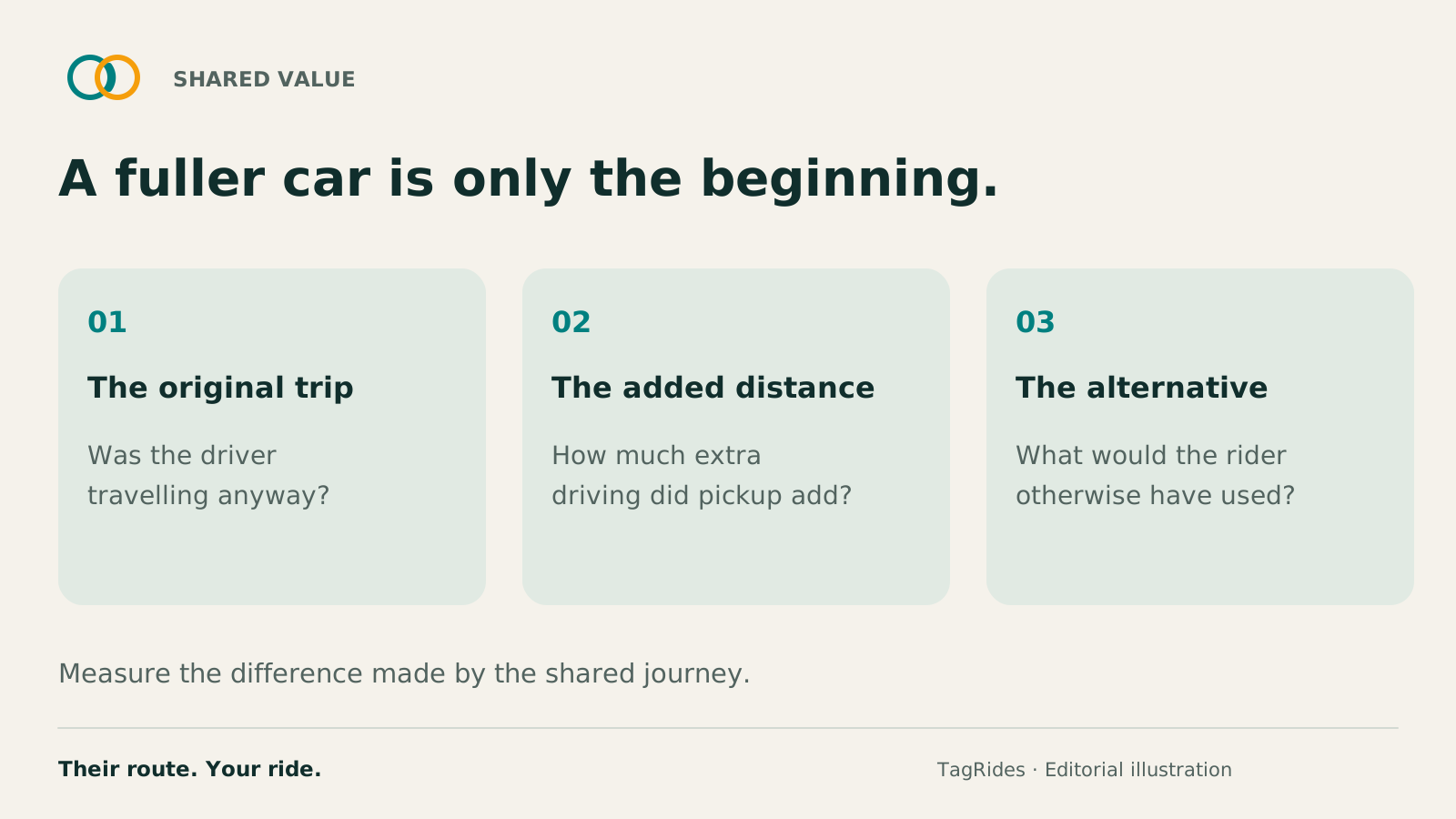
- The original trip
- Was the driver travelling anyway?
- Added driving
- How much extra distance did pickup add?
- The alternative
- What would the rider otherwise have used?
Was the driver already making the trip? How much extra driving did the pickup add? Would the rider otherwise have taken another car, a bus, walked, or stayed home?
Those questions give us a useful way to assess TagRides. A shared ride replacing another car trip is different from one replacing a walk. A newly possible trip may bring an important access benefit even if it adds emissions. We should understand both.
Public transport remains the backbone
A city needs transport that moves large numbers of people well. Shared-route technology should be assessed by how it fits that wider network.
The Blue Line anniversary report describes that direction clearly: rail as a backbone, with buses and first- and last-mile services helping people reach it.[7] The train can do its job well and a passenger can still face a difficult or expensive connection at either end. That gap is worth understanding before adding more road journeys.
An Along ride could help someone reach a bus stop or rail station from a poorly connected starting point. It might cover a gap when another suitable service is unavailable. Those are practical uses to test with communities and operators.
It should also be easy to recognise a poor fit. If sharing adds more car journeys by pulling people from a well-used bus, the result may work against the city's needs. Fare negotiation alone does not settle that question.
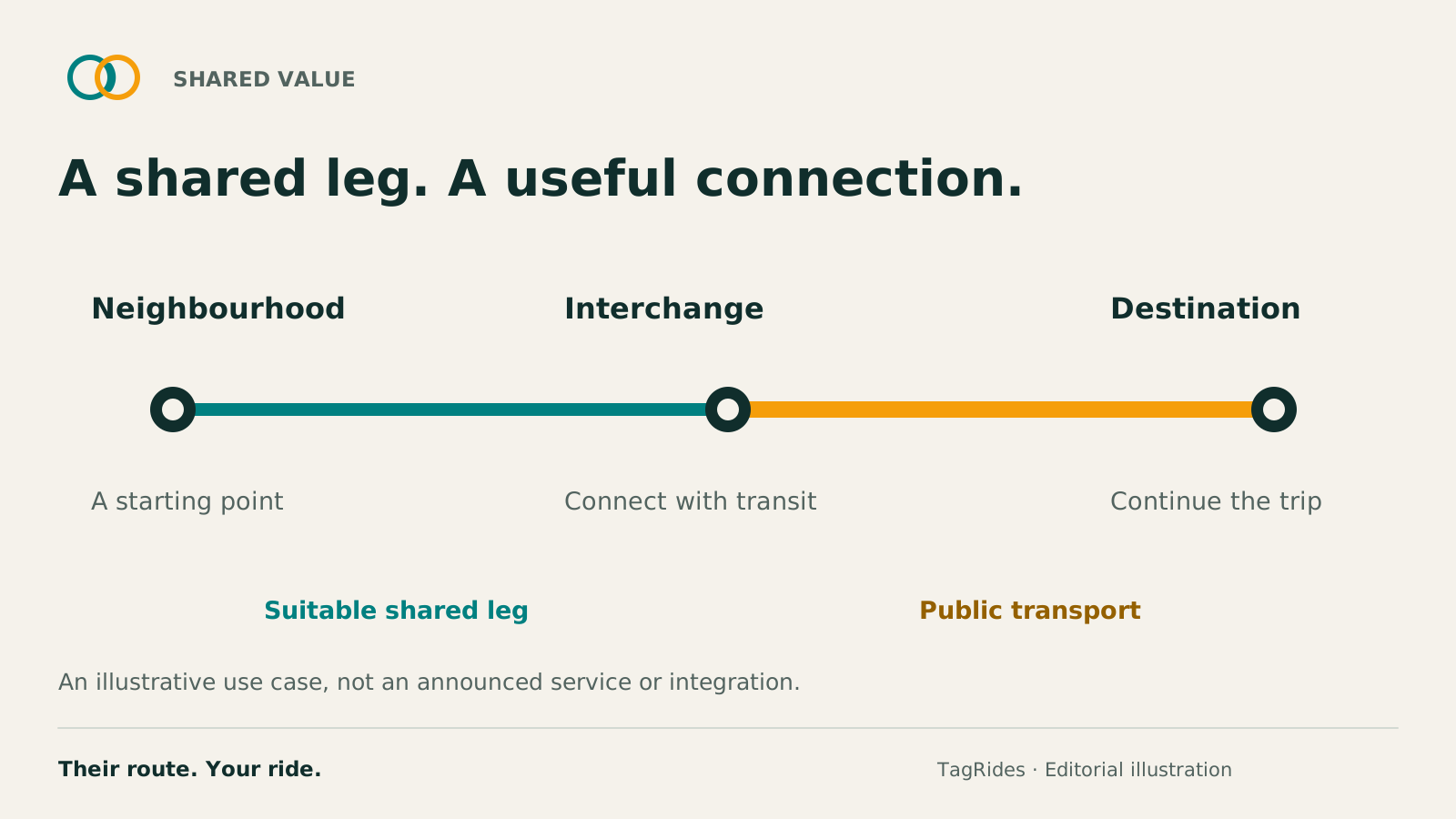
- Neighbourhood
- Start with a suitable shared leg
- Interchange
- Connect with public transport
- Destination
- Continue the complete journey
Useful partnerships would look at pickup locations, connecting journeys and what passengers otherwise use. They would learn from the people already operating the routes.
That principle can apply across vehicle types, but each has different requirements. TagRides' reviewed Lagos configuration includes standard cars and keke. Buses, minibuses and shuttles are possible wider applications that need their own operating and technical work.[4]
For a short look at another approach to transport energy costs, LAMATA's earlier biogas video provides background.[9] It is an archive item from 2025, included alongside the newer reporting—not evidence of a completed TagRides project or a new September rollout.
Better records can support better relationships
Transport is also a business of agreements: between riders and drivers, vehicle owners and operators, and transport communities and public bodies.
Clear trip and payment records could make some of those relationships easier to manage. Owners want to reconcile receipts. Drivers want to understand deductions. Unions and public bodies need a clear basis for any authorised obligation.
Lagos has a relevant example. In August 2026, LAMATA announced a Bus Industry Transition Programme agreement with NURTW and RTEAN, describing cooperative governance and digital fare collection.[5] It points to an interest in modernisation that includes existing operators.
For TagRides, fleet reconciliation and authorised remittances are future development opportunities. They would require products, agreements and reliable payment handling. The LAMATA announcement is not a TagRides partnership.
The underlying aim is understandable: records that help people know what happened, what was paid and what is owed. Useful information should strengthen trust, alongside care for people's travel data.
A market opening is also a sustainability test
Uber's September departure from Nigeria makes this question especially timely. BellaNaija reported on 3 September 2026 that the company had ended its Nigerian operations the previous day, reproducing its notice that the decision followed a business review.[10]
For us, the departure sharpens a question that existed before the headline: can digitally coordinated transport remain affordable for ordinary journeys while giving drivers and the service itself a worthwhile return?
That is the problem TagRides was built to address. Starting with a journey already planned creates a different cost structure from sending a dedicated vehicle on a new pickup trip. It creates an opportunity to test a different model—not proof that it will succeed simply because another company has left.
The opportunity extends beyond serving a departing platform's customers. It includes people who need an affordable journey to school, a customer, a health appointment or family, and drivers with suitable capacity already moving their way. The lasting advantage will come from making those connections work at prices both sides can sustain.
There is evidence for the need, without inventing a global market percentage. In TagRides' early company survey, 192 of 210 Lagos riders named pricing as a priority.[11] Internationally, the UN's 2024 SDG report, using 2023 data from 2,039 cities in 188 countries, found that four in ten urban residents lacked convenient access to public transport.[12] The first is local company research; the second measures access, not ride-hailing affordability. Together, they explain why we are testing a model that makes suitable shared journeys easier to use.
For investors, the opportunity is in the return journey
The commercial idea begins with two needs meeting: a rider wants a suitable, affordable trip; a driver has passenger capacity on a compatible route.
Connecting them could support a service without requiring the platform to own every vehicle or create every journey. But a promising first ride is only the beginning.
Do riders return at ordinary fares? Do drivers keep offering seats because the earnings make sense? Are there enough compatible journeys at the times people need them? Can the service cover the cost of payments, support and day-to-day operations?
These questions make the investment case concrete. A thousand drivers scattered across different routes may be less useful to one commuter than a dependable group travelling their corridor each morning.
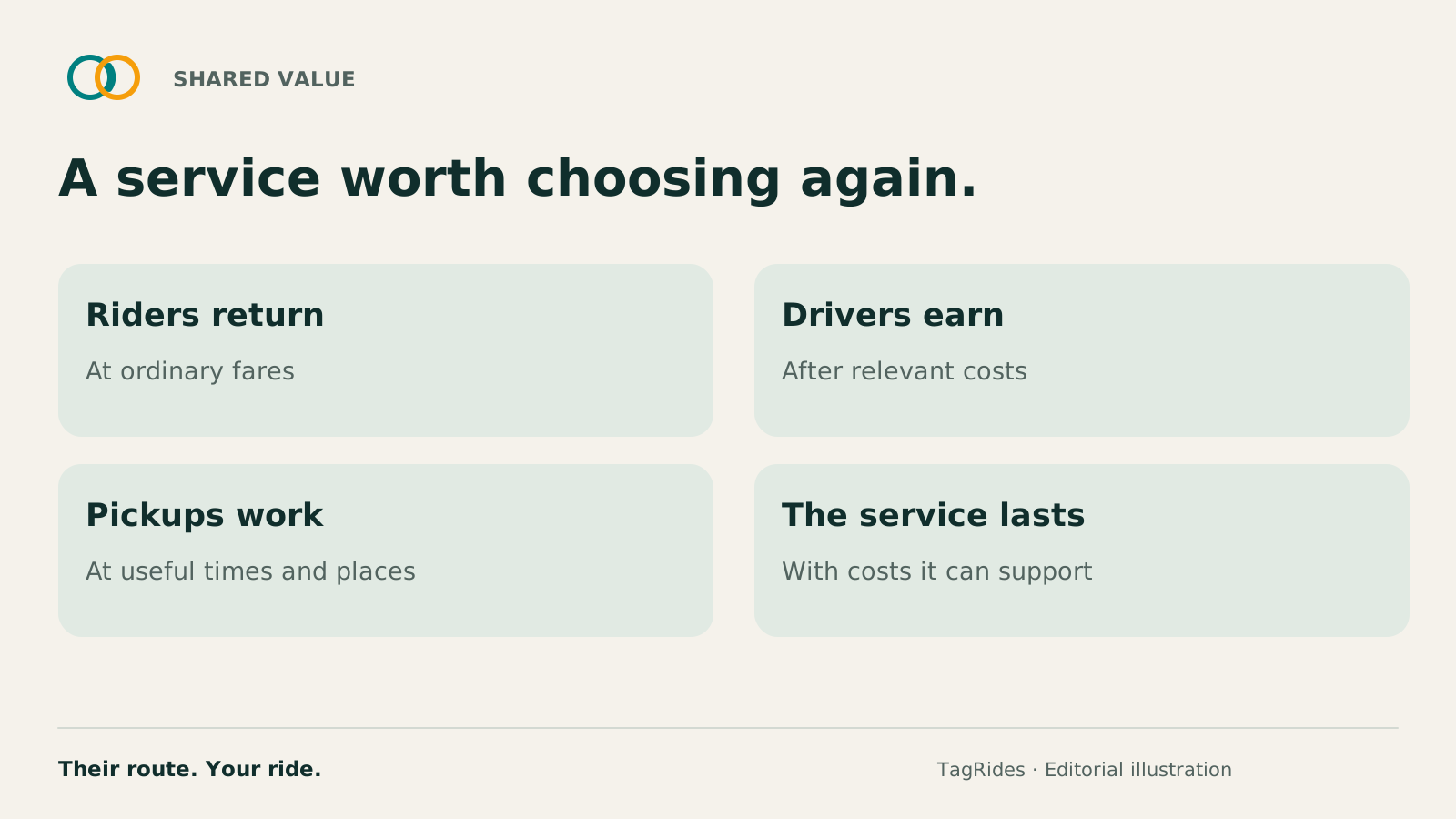
- Riders return
- At ordinary fares
- Drivers earn
- After relevant costs
- Pickups work
- At useful times and places
- The service lasts
- With costs it can support
This is where trust and local operating knowledge could become a lasting advantage. Competitors can copy features. Riders and drivers can use more than one app. TagRides has to earn a place in their day by making the connection work consistently.
The next stage is a focused Lagos pilot, with the MVP in internal testing. Completed paid rides, repeat use, driver earnings and dependable pickups will tell us more than a large signup number alone.
Keep the ambition. Make the evidence useful.
The long-term ambition is a service useful to hundreds of millions, and eventually billions, of people. That is a direction to work towards, not an adoption forecast.
Other cities also have journeys already happening, spare passenger capacity and gaps in everyday access. Expansion would mean learning where those pieces fit—and where they do not.
For development partners, the most direct connections are decent work, accessible transport and climate outcomes: SDGs 8, 11 and 13. Inclusion and real partnerships matter too.[6] The value lies in outcomes people can see and measures others can examine.
A driver should find sharing worthwhile. A rider should complete a useful journey. A city should be able to understand the effect on its transport network.
The next transport breakthrough may already have a seat. The work is making the right connection—and showing why it matters.
Invest in mobility, operate passenger vehicles, or work on urban development? Start a shared-value partnership conversation.
Their route. Your ride.
Sources
IEA, Sheltering From Oil Shocks: Road transport fuels, March 2026. General guidance on carpooling and public transport.
MIT News, How ride-sharing can improve traffic, save money, and help the environment, published January 2017. An account of a simulation using New York taxi demand; not a TagRides or Lagos evaluation.
Union of Concerned Scientists, Ride-Hailing's Climate Risks, February 2020. US-focused analysis of emissions relative to displaced trips.
TagRides product and pilot information; vehicle scope checked against internal Lagos configuration. Wider vehicle applications are possibilities, not a service catalogue.
LAMATA, NURTW, RTEAN Sign Historic Agreement to Drive Lagos Bus Industry Transition Programme, August 2026. Programme announcement, not an evaluation or a TagRides agreement.
United Nations: Goal 8, Goal 11, Goal 13, Goal 10 and Goal 17. Intended contributions, not certified impact.
LAMATA, Three Years On: Blue Line Moves 9m Passengers in 70,000 Trips, 5 September 2026. Operator-reported cumulative passenger movements and train trips over three years; not unique users or a TagRides result.
LAMATA, Working with the Community to Build an Open Air Quality Ecosystem in Nigeria, 6 August 2026. Account of air-quality monitoring and reported transport-heavy hotspots; no TagRides emissions reduction is established.
LAMATA TV, Lagos Commissioners Back Biogas Plan to Cut Transport Costs. Publisher's archive page dated 6 March 2025; linked video runs 3 minutes 57 seconds according to the publisher's gallery. Background on a proposal, not current implementation evidence.
BellaNaija, Uber Nigeria Shutdown: Why the Ride-Hailing Company Is Leaving After 12 Years, 3 September 2026. Reports the 2 September exit and reproduces Uber's business-review notice. The implications for TagRides are the founder's analysis, not evidence of automatic market capture or proof of a single cause for Uber's decision.
TagRides, published Lagos rider research. Company sample of 210 riders, with 192 naming pricing; not a representative citywide estimate.
United Nations, SDG Report 2024, Goal 11. Convenient public-transit access based on 2023 observations from 2,039 cities in 188 countries; not a global ride-hailing affordability or addressable-market estimate.