Identify the rider and journey
Read the rider’s name and requested seats, pickup and drop-off. Distinguish the time to reach pickup from the passenger’s trip length. A short straight-line distance may still involve a difficult road approach.
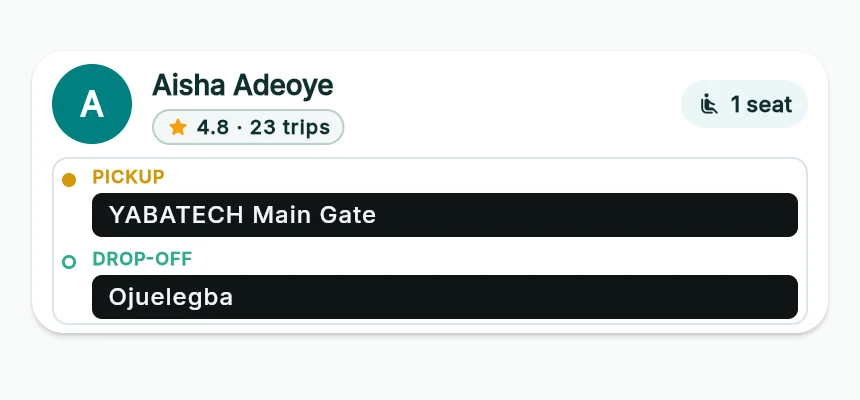
Read the identity and stops before answering an offer.
Web app panel · sample data · Captured 2026-09-25
- 1Check the requested seats and rider identity.
- 2Pickup and drop-off are separate points on the shared journey.
Separate fare from earnings
Rider’s offer is the offered gross fare. You’ll receive is the quoted driver amount after the applicable service fee. They are not two payments to collect. Read the current quote rather than applying a fee percentage from memory.
Accept or counter
If the offer works for the route, use Accept. Where a counter control is available, adjust the amount and send it once. Awaiting rider means your counter still needs the rider’s response.
Watch the confirmed state
Wait for the card or journey board to update. An agreed fare, an upcoming pickup and an onboard passenger are separate states. Use the confirmed pickup list to decide whom you are meeting next.
How you know it worked
The request shows the acknowledged offer/pickup state and you understand the amount and route involved.
A useful next step
If something goes wrong
Offer response was not confirmed
Check the latest price and availability before retrying. Do not treat a timeout as acceptance or keep tapping while processing.
The request disappears
The rider may choose someone else or the route/availability may change. Do not count the request as completed income.
The quoted net changes
Review the latest confirmed amount. If the accepted fare, fee and completion record cannot be reconciled, report the request and amounts to support.